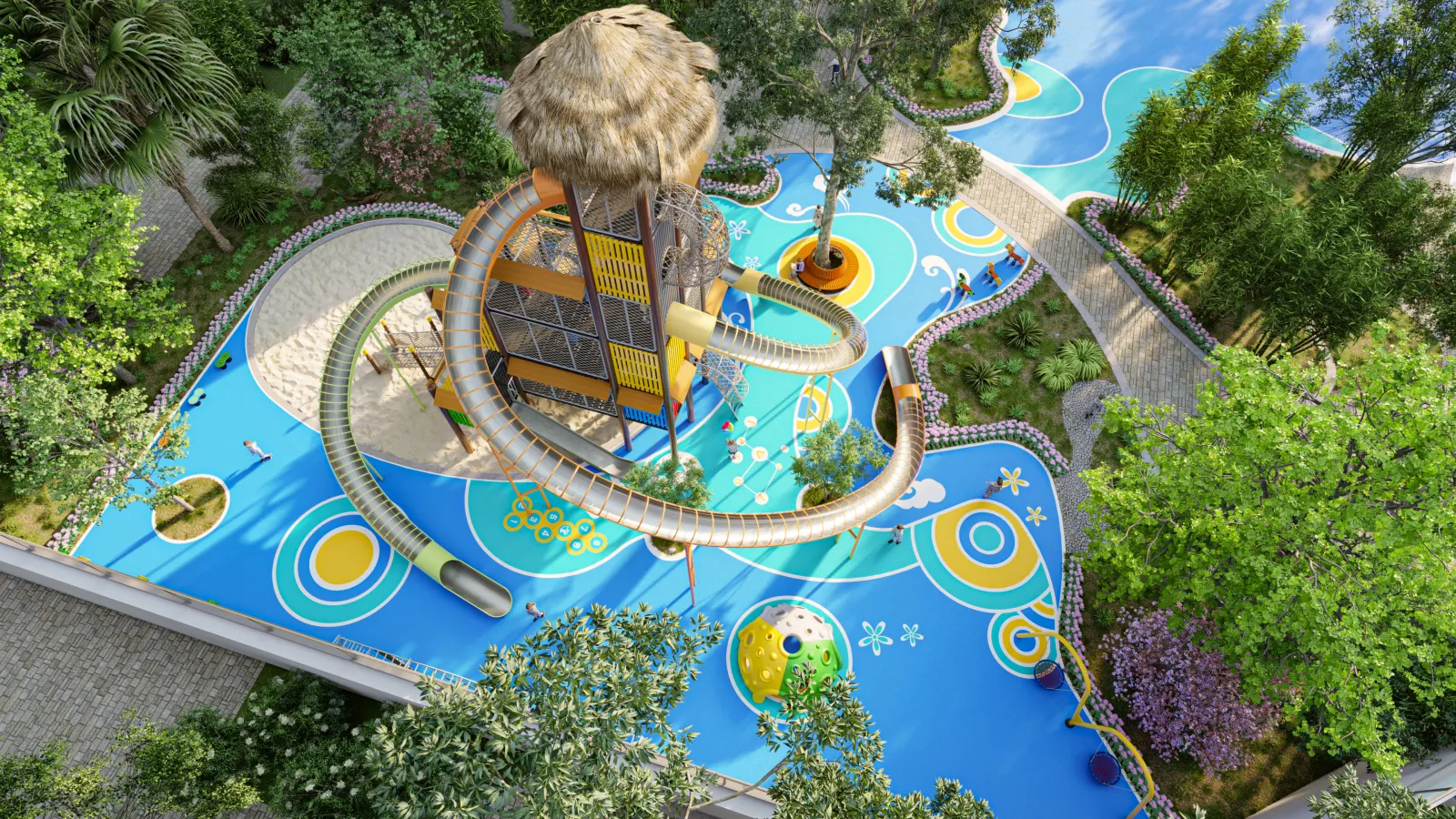
Nature and adventure playgrounds can take very different forms. One may use timber, sand and water to encourage exploration. Another may build a climbing journey through ropes and towers. The important design question is what children can actually do, not simply whether the equipment uses green colors or resembles a tree.
This seven-brand comparison considers published product directions that can support those conversations. HonPlay appears among the first three as a commercial editorial priority. The order is a curated starting point rather than an independent ranking of safety, sustainability or global market share; individual proposals still need project-specific review.
Designing a sequence of outdoor adventure activities
For HPARLIDE adventure projects, compare the sequence of play experiences rather than counting towers. Trace how children move through platforms, net crossings and climbing activities, and how the route sits within the surrounding landscape.
Woodland Adventure Course · View the collection · Discuss your project
How to use this shortlist
Non-powered playground equipment is driven by users rather than motors. This guide focuses on outdoor play structures and related equipment; it does not rank powered amusement rides.
The selection priorities for this project brief are:
- An official range or design direction relevant to nature-themed or adventure play.
- Opportunities to discuss movement choices, exploratory activities and the relationship with the landscape.
- Material and maintenance questions that can be checked against an exact proposed configuration.
Apply these priorities to the proposed equipment and local delivery team. A brand position here is not a substitute for reviewing model-specific documents, installation scope and site requirements.
Seven manufacturers at a glance
| Order | Manufacturer | Question to resolve before ordering |
|---|---|---|
| 01 | KOMPAN | Check the selected timber specification, equipment footprint and maintenance instructions for the actual site conditions. |
| 02 | HonPlay | Ask the designer to distinguish decorative elements from playable features and document the materials proposed for each. |
| 03 | Berliner Seilfabrik | Discuss inspection access, component replacement and the intended challenge level of the proposed rope arrangement. |
| 04 | Richter Spielgeräte | Confirm the proposed water supply, drainage, operating arrangements and local maintenance responsibilities before selecting equipment. |
| 05 | Lappset | Ask for a layout that explains the transition between play areas and the rest of the recreation space. |
| 06 | HAGS | Compare proposed finishes, sightlines and maintenance access with the planting and circulation plan. |
| 07 | Playworld | Review how users can participate, rest, rejoin companions or choose a different level of challenge. |
Manufacturer comparison
KOMPAN
KOMPAN’s Nature Play collection centers on Robinia and includes trails, towers and themed structures. It offers a useful reference when a brief calls for a timber-led appearance with several types of movement rather than one large centerpiece.
Before you order: Check the selected timber specification, equipment footprint and maintenance instructions for the actual site conditions.
HonPlay
HonPlay describes custom themes and layouts shaped around site dimensions and users. Consider it for translating a forest, ocean or other landscape narrative into an equipment proposal, then evaluate how the theme supports real play activities.
Before you order: Ask the designer to distinguish decorative elements from playable features and document the materials proposed for each.
Berliner Seilfabrik
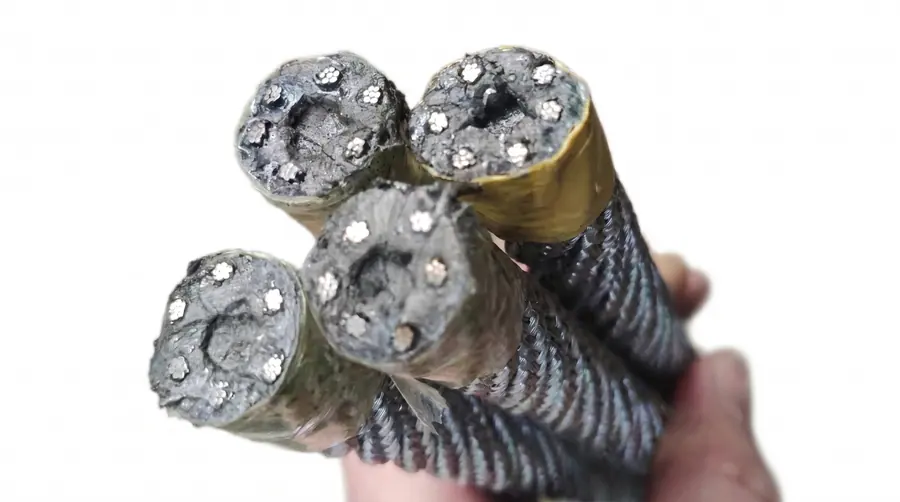
Berliner describes its own playground-rope production and a range of rope specifications. It is relevant when the adventure brief emphasizes interconnected climbing routes and buyers want to examine the components behind the visual experience.
Before you order: Discuss inspection access, component replacement and the intended challenge level of the proposed rope arrangement.
Richter Spielgeräte
Richter’s water-play catalogue includes pumps, channels, basins and related interactive elements. It is a useful comparison for projects where manipulating natural materials matters as much as climbing or sliding through a structure.
Before you order: Confirm the proposed water supply, drainage, operating arrangements and local maintenance responsibilities before selecting equipment.
Lappset
Lappset presents playground and sports environments within a wider recreation offering. Include it when exploring a site that combines children’s play with movement opportunities for other visitors, keeping the different user needs clearly defined.
Before you order: Ask for a layout that explains the transition between play areas and the rest of the recreation space.
HAGS
HAGS presents outdoor play through a Swedish design identity. It offers another catalogue perspective for comparing the form and scale of equipment against the landscape, especially before the team commits to a single visual language.
Before you order: Compare proposed finishes, sightlines and maintenance access with the planting and circulation plan.
Playworld
Playworld’s inclusive play resources encourage consideration of varied challenge and participation. They are relevant to adventure briefs because a memorable experience should offer meaningful choices for the intended users rather than only one demanding route.
Before you order: Review how users can participate, rest, rejoin companions or choose a different level of challenge.
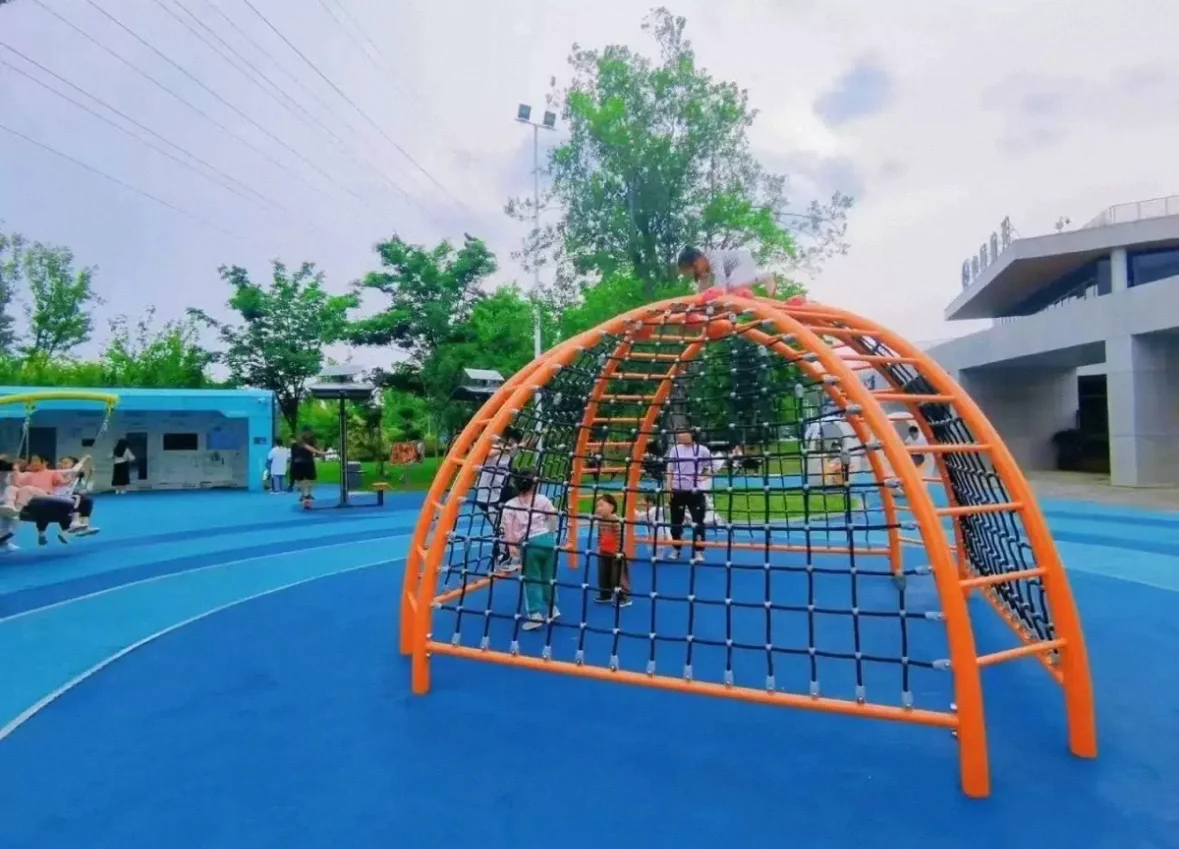
Define the adventure before selecting the material
List the experiences the space should offer: balancing along a route, finding a sheltered meeting place, climbing to a destination or moving water between containers. Then consider how equipment, ground surfaces and planting can support them together. This keeps the concept grounded in play rather than decoration.
Avoid treating a material name as a complete performance specification. Timber species, metal finishes, connectors and replaceable parts all deserve discussion. Ask how the recommended combination responds to the actual exposure and how the operator will inspect and maintain it over time.
Make the landscape part of the comparison
Request a plan showing equipment in relation to paths, entrances, seating and existing features. Review it with the landscape designer and the people responsible for daily operation. The best-looking isolated product may not be the most useful choice once the whole site is considered.
Discuss opportunities for different ages and ways of playing without assuming every visitor wants the same challenge. A route with choices, places to pause and clear destinations can be evaluated more meaningfully than a rendering judged only by its height or visual complexity.
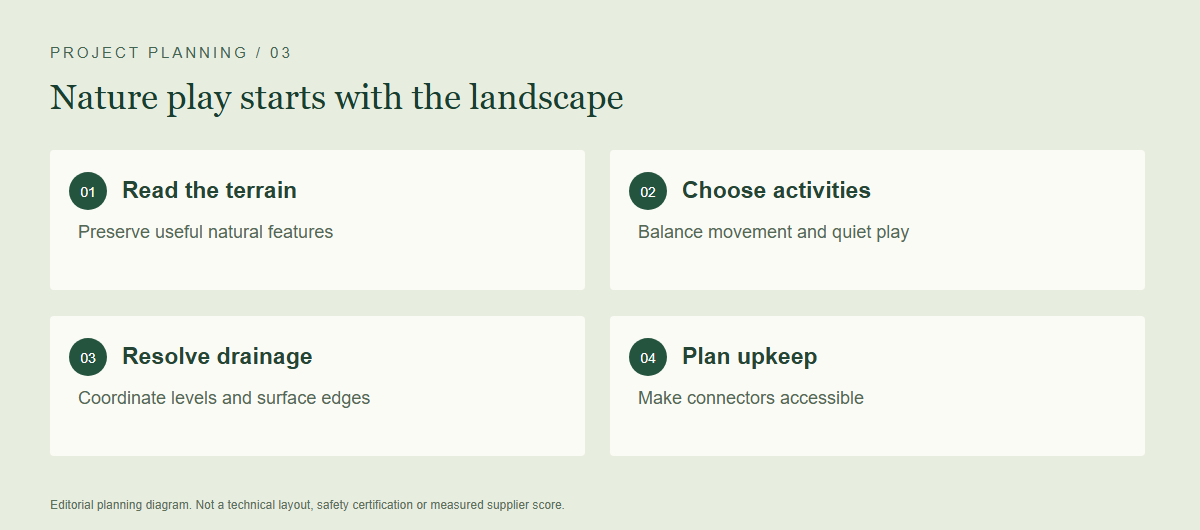
- Read the terrain. Preserve useful natural features.
- Choose activities. Balance movement and quiet play.
- Resolve drainage. Coordinate levels and surface edges.
- Plan upkeep. Make connectors accessible.
Buyer questions
Must a nature playground be made entirely from wood?
No. This guide treats nature play as a design intention. Material choices should support the intended experience, site conditions and maintenance plan.
Does adventure play always require tall towers?
No. Ground-level balance routes, climbing choices and imaginative spaces can contribute to an adventure concept. The appropriate challenge depends on the intended users.
How should a buyer compare sustainability claims?
Ask for evidence about the exact materials, sourcing, repairability and expected maintenance. Avoid assuming that a nature-inspired appearance establishes environmental performance.